

Faith
The formation of the parish cannot be left solely to the liturgy. But it needs to start there.
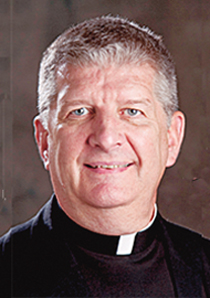
Father Robert M.
O'Grady
O'Grady
The first place of formation is the liturgy itself. Surely the Mass, but also the other liturgies of the sacraments, sacramentals or other prayer, especially the Liturgy of the Hours, are "classrooms" of formation.
Keep in mind that before we think about the people involved, the texts of prayers and readings, the signs and symbols, the music, the actions, the gestures, the setting and all that attends that, all of those together form a particular liturgical event and are forming us.
The Sunday Mass is the primary experience of most Catholics of "the liturgy." And it is supposed to be what forms us week by week into more graced disciples of Christ and enables us with that grace to go to others with his message.
So, as we have previously hinted, the environment of the building, outside, as we arrive, and inside, as we take a place in the assembly, already should be saying "this is a sacred space." The hospitality as we enter, either as weekly parishioners or one-time visitors, ought to convey that the parish realizes the importance of hospitality.
Arriving in a timely fashion conveys an awareness of this sacred space and action as important for us who are gathering. Already, you can see how we are being formed and shaped into this assembly called by God in Christ to praise, worship, and adore.
The assembly's participation in all the aspects of this action both allows the proclaimed Word of God to be heard, to take root in minds, hearts, and lives, and to be lived. The Word shapes us individually and as this assembly takes hold of us, and we, as it were, become proclaimers and teachers of the Word to others.
Our celebration continues as gifts, especially bread and wine, are presented. Through them, we present ourselves to be changed by the Holy Spirit through the ministry of Christ continued in the ministry of the ordained priest. The priest, too, is being formed and shaped by Word and sacrament at every Mass at which he presides in the "person of Christ the Head."
For this to be effectively carried out, everyone in the assembly needs to be aware of the responsibility entrusted to each of us as participants. Responding musically and in word and in silence. Fulfilling each one's role -- and only that role -- in every liturgy.
Pope Leo XIV called the attention of priests to this responsibility at his May 27, 2026, weekly audience address: "I therefore urge all those called to prepare the celebration of the divine mysteries, in particular priests who exercise the ministry of liturgical presidency, always to uphold that respect for the texts and regulations of the liturgy, which springs from an inner attitude of openness and trust in God, manifesting humility before His greatness and sincere fidelity to ecclesial communion."
Notice he says "all who prepare," which quite clearly means all of us, since he then makes a special appeal to those who "exercise liturgical presidency," which would mean bishops and presbyters.
The Sunday Mass has the power to change us simply by its proper celebration, attention to the words and prayers, our participation in the prescribed ways and the carrying out of assigned ministries.
The formation of the parish cannot be left solely to the liturgy. But it needs to start there.
All the various aspects of the liturgy fit together according to the design of the Church. None of us is free to do "what I want." Doing so interrupts the "we" that is of the essence, or the very meaning of any liturgy.
Dioceses and parishes must help all of us to go a bit deeper into the liturgy.
This can be done by initial and ongoing formation of all ministers, including, some might say especially, bishops, priests, and deacons. The leaders need to be leading according to the mind of the Church and her texts and directions; otherwise, we risk the assembly being malformed. Parishioners appreciate a bit of information easily provided in parish bulletins about what they are doing at Mass and why. The Mass, or any sacrament for that matter, is not to be a classroom presentation, so that needs to be avoided in favor of, perhaps, adult education or little items in religious education programs or schools.
The availability of many excellent sources, including YouTube presentations and online lectures, can help individuals and groups. However, not everything that is readily available is readily helpful for our liturgical formation. And the expansion of AI into our lives needs to be carefully monitored. Check with a priest or deacon about something interesting you find to make sure it fits with the Church's plan for a liturgy.
Next week, we'll look at what formation for clergy looks like, starting in seminaries and then continuing throughout their lives.
Help us expand our reach! Please share this article on social media

Recent articles in the Faith & Family section
-

How I use AI (and how I don't)Sister Hosea Rupprecht
-

Getting on a calendar -- Be a saint firstFather Robert M. O'Grady
-

The Golden RuleArchbishop Richard G. Henning
-

World Mission SundayMaureen Crowley Heil
-

Dressing for the feastScott Hahn


