

Spirituality
An image of New York City captured by astronaut Frank Culbertson aboard the International Space Station on the morning of Sept. 11, 2001. NASA photo
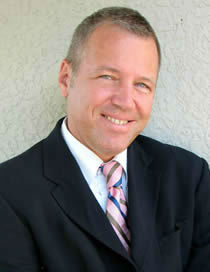
Michael
Pakaluk
Pakaluk
If we believe that God's providence oversees our nation, then for some events we ought to interpret what that event means for us, under that providence.
Consider an analogy from personal life. A married couple may look back over their life together, through the words of the hymn, "through many dangers, toils, and snares, we have already come; 'tis grace hath brought us safe this far," and look back over some suffering or loss -- say, that promotion that never materialized -- and try to figure out what good things came from it.
Such an exercise is not always a finding of good from the bad. Sometimes, for instance, one sees warnings, which ought to have been heeded but weren't; or chastisements for sins; or little slip-ups, which led to a big fall. But the point is to look for the meaning and learn from it.
That our Founders believed in such a providence is an established fact. It is written into the nation's Great Seal: "The pyramid signifies Strength and Duration: The Eye over it and the Motto allude to the many signal interpositions of providence in favour of the American cause." So explained the Secretary of Congress in 1782. By the motto he meant "Annuit coeptis," which means, "He has favored our undertakings," echoing a Roman prayer from Virgil, "Jupiter Almighty, favor my undertakings!"
As for chastisements, think of Lincoln's Second Inaugural:
"If we shall suppose that American Slavery is one of those offences which, in the providence of God, must needs come, but which, having continued through His appointed time, He now wills to remove, and that He gives to both North and South, this terrible war, as the woe due to those by whom the offence came, shall we discern therein any departure from those divine attributes which the believers in a Living God always ascribe to Him?"
Lincoln's words show how the search for the meaning of providence is naturally non-partisan. Many Northerners at that inauguration wanted to hear a triumphant victory speech. Many wanted the South to be blamed and castigated. But Lincoln saw God's providence as higher than the purposes of man: "The Almighty has His own purposes."
Thus, when President Trump said in his inaugural address for his second term, "I felt then and believe even more so now that my life was saved for a reason. I was saved by God to make America great again," and later, "by the hand of providence and the grace of Almighty God, my life was spared," one cannot rule out -- though I do not claim that this is correct -- that America in God's providence is meant to become great by somehow reacting against Trump.
That it is difficult to discern the meaning of providence in great events does not imply that we should not try. Also, we have no office for claiming a meaning publicly, as a quasi-official interpretation. Our Founders clearly, in the very device of a Great Seal, believed they had that kind of authority. They did not adopt as their motto "Nonne coeptis annuit?," "Well, hasn't he favored us?" They weren't making a proposal. But Lincoln speaks on a hypothesis with great tact: "If we shall suppose ..." and "if God wills that it continue, until every drop of blood drawn with the lash, shall be paid by another drawn with the sword" -- even though he ends on a note of perfect certainty, "so still it must be said, 'the judgments of the Lord, are true and righteous altogether.'"
I say all of these things as a brief preface to asking you to consider engaging in the exercise, on the 25th anniversary of the 9/11 attacks, of asking what was their meaning for us in God's providence? Were they a warning? A call to conversion? A judgment of some kind? Assuming that our nation was and remains under God's providence, what lessons were we meant to draw, then and now?
The events of that day clearly did speak to many of us individually. If you are old enough, you may know people who changed their lives radically because of it. They spent more time with their families, perhaps, or welcomed a new child, or prayed more, or started going to daily Mass. Watching bond traders jump from a burning skyscraper after supposing that they had begun that day as a typical morning's work, revealed to many the fleetingness of wealth and power, and the fact that they themselves had left burning fires -- personal emergencies -- unattended to.
Speaking purely as a private person, with no special authority, I would say that the nation in the immediate aftermath took the posture of a suffering servant, and we were loved around the world because of it. But does "turn the other cheek" ever apply to nations? Those who were alive then saw how, not long after, an understandable righteous zeal turned into anger, and a thirst for revenge, and then wars which dissipated our wealth (we had a budget surplus in 2000), cost us the world's admiration, and beefed up the government as a supposed savior against fears ("Terror"). Then, having defined ourselves in a certain way, we responded to the global financial crisis and COVID, accordingly.
I don't say take my opinion on anything here except this: that it is good for American Catholics to reflect on our country in light of God's providence.
- Michael Pakaluk, an Aristotle scholar and Ordinarius of the Pontifical Academy of St. Thomas Aquinas, is a professor in the Busch School of Business at the Catholic University of America. He lives in Hyattsville, MD, with his wife Catherine, also a professor at the Busch School, and their eight children. His latest book is "Be Good Bankers: The Economic Interpretation of Matthew's Gospel.'' You may follow him on Substack at MichaelJosephPakaluk.Substack.com.
Help us expand our reach! Please share this article on social media

Recent articles in the Spirituality section
-

What was 9/11 for?Michael Pakaluk
-

The praying mantisEffie Caldarola
-

John, a witness to the AssumptionMichael Pakaluk
-

Will millions die due to USAID cuts?Effie Caldarola
-

How thoughts affect usEffie Caldarola


